Behind the Scene: How Intimacy Coordinators Are Transforming Vulnerable Storytelling in Prestige Drama
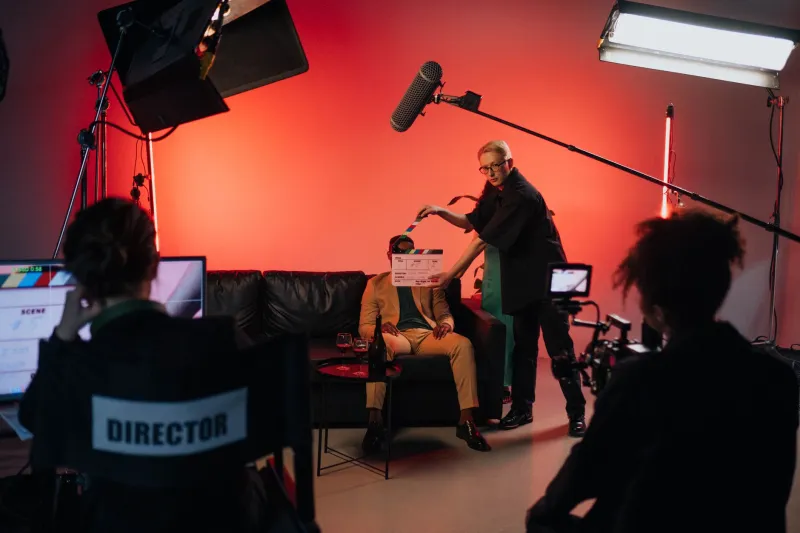
For decades, the filming of intimate scenes in drama productions operated largely on improvisation, assumption, and the unspoken expectation that actors would simply navigate discomfort on their own. Directors gave general direction. Choreography was minimal. And the emotional and physical exposure required of performers — particularly women — was treated as an unremarkable professional obligation. That era, however, is drawing to a close.
The rise of the intimacy coordinator as a recognized and frequently mandated production role represents one of the most meaningful structural shifts in American prestige drama over the past several years. What began as a grassroots response to the conversations sparked by the #MeToo movement has evolved into a sophisticated professional discipline with formal training programs, industry guidelines, and an expanding presence on sets ranging from premium cable productions to major streaming platforms.
What an Intimacy Coordinator Actually Does
The title itself can be misleading to those unfamiliar with the role. Intimacy coordinators are not simply chaperones or consent monitors, though ensuring informed, ongoing consent is certainly central to their work. They function as specialized movement directors — choreographing physical scenes involving nudity, simulated sex, or heightened emotional and bodily vulnerability with the same deliberate craft that a stunt coordinator brings to an action sequence.
Prior to filming, they consult with directors to understand the narrative purpose of a scene. They then work directly with actors to establish clear physical boundaries, negotiate what will and will not be depicted on camera, and develop a precise vocabulary of movement that both serves the story and honors the performers' comfort. On the day of filming, they are present on set, functioning as advocates and technical collaborators simultaneously.
Organizations such as Intimacy Directors International and the Intimacy Professionals Association have developed standardized training and ethical frameworks for practitioners in the United States, lending the profession a rigor that was entirely absent from production culture just a decade ago.
Authenticity, Not Restriction
A persistent misconception among some corners of the industry — and among certain audiences — is that the presence of an intimacy coordinator necessarily sanitizes or diminishes the dramatic power of vulnerable scenes. The evidence from productions that have embraced the role suggests precisely the opposite.
When actors are given clear parameters, genuine agency over their physical performance, and the assurance that the agreed-upon boundaries will be respected throughout filming, they are frequently able to access deeper emotional registers than they might otherwise reach. The psychological safety that comes from structured choreography, paradoxically, can unlock greater artistic freedom. Performers are not managing anxiety about what might be asked of them next; they are fully present in the scene.
Several high-profile productions have credited their intimacy coordinators with helping to craft sequences that feel both emotionally raw and technically precise — scenes that serve the narrative rather than existing as spectacle. The distinction matters enormously in drama, where the purpose of vulnerability on screen should always be to illuminate character, relationship, or theme, rather than to titillate or shock for its own sake.
The Streaming Era and Shifting Audience Expectations
The timing of intimacy coordination's ascent is not incidental. The streaming era has brought an unprecedented volume of prestige drama into American homes, and with that expansion has come a more discerning and ethically attentive viewership. Audiences today — particularly younger demographics — are increasingly aware of the conditions under which their favorite content is produced. They ask questions that previous generations of viewers rarely considered: Was that scene safe to film? Did the actors have genuine input? Was the exposure necessary to the story?
Platforms including HBO, Netflix, Hulu, and Amazon have responded to this cultural shift by formalizing intimacy coordination requirements within their production standards. Some have gone further, building relationships with specific practitioners and advocating publicly for the profession. This institutional support has been critical in normalizing the role and ensuring that it is not treated as an optional or burdensome addition to a production budget.
For drama as a medium, this shift in audience expectation is meaningful. Viewers who trust that what they are watching was produced with care and consent are arguably more capable of fully engaging with the emotional content of a vulnerable scene. The fourth wall between story and production ethics, once largely invisible to most viewers, has become increasingly transparent — and prestige drama is adapting accordingly.
The Actors' Perspective
Perhaps the most compelling testament to the value of intimacy coordination comes from the performers themselves. Numerous actors across American prestige drama have spoken openly about the difference the role has made to their experience on set. The ability to have substantive pre-production conversations about physical boundaries, to know that those boundaries are documented and protected, and to have a dedicated advocate present during filming has been described by many as transformative.
For actors earlier in their careers — those with less institutional power to advocate for themselves — the presence of an intimacy coordinator can be particularly significant. It redistributes some of the protective infrastructure that more established performers can command through their representatives and contracts, extending it to those who might otherwise feel compelled to simply comply with whatever is asked of them.
This democratization of safety and agency is not merely a labor concern; it is a creative one. Drama that draws on the full range of human experience — including vulnerability, desire, grief, and physical intimacy — depends upon performers who are genuinely able to inhabit those states. Anything that undermines their capacity to do so ultimately undermines the story itself.
What Comes Next
The profession continues to evolve. Conversations are ongoing within the industry about expanding intimacy coordination to encompass a broader range of emotionally intense scenes — not only those involving physical intimacy, but also sequences depicting trauma, grief, or psychological distress. The underlying philosophy, after all, applies equally: that deliberate choreography and clear communication between director, actor, and a trained specialist produces better work, not lesser work.
For American prestige drama in particular — a form that has staked its cultural authority on its willingness to explore the full complexity of human experience — the integration of intimacy coordination represents a maturation rather than a constraint. It is the industry acknowledging, at last, that the most powerful stories are told not despite care and craft, but because of them.
At eDramaTV, we believe every story deserves the stage — and every performer deserves the conditions that allow them to bring that story fully to life.