Patience Rewarded: How Drama's Slow-Build Storytelling Is Winning Over a New Generation of Viewers

For the better part of the last decade, conventional wisdom in the television industry held that drama audiences needed to be hooked within the first ten minutes, delivered a major revelation before every commercial break, and left breathless at the end of each episode. That model produced compelling content. It also produced a generation of viewers who learned to expect stimulation on demand — and, perhaps more consequentially, learned to distrust stories that dared to breathe.
Something has shifted. Quietly, almost imperceptibly at first, a counter-movement has taken root in prestige drama — one that bets on delayed gratification, measured pacing, and the kind of narrative patience that once felt reserved for literary fiction. And audiences, rather than abandoning these slower-burning series, are embracing them with a fervor that the twist-of-the-week format rarely sustains.
The Architecture of the Long Game
To understand the slow burn's resurgence, it helps to think about how drama storytelling has traditionally been structured. The episodic hook model — rooted in network television's need to retain viewers across commercial interruptions — prioritized escalation. Every act break needed a question. Every episode needed a shock. Every season finale needed to detonate something irreversible.
The streaming era initially seemed to accelerate this tendency. With entire seasons available at once, producers feared that audiences would simply stop watching the moment momentum faltered. Early binge-era dramas leaned even harder into cliffhangers and plot density, as though speed itself were the antidote to the skip button.
What many showrunners discovered, however, was that this approach created a particular kind of viewer fatigue. When every episode delivers maximum intensity, the baseline for what registers as dramatic rises constantly. Audiences become desensitized. The emotional stakes, paradoxically, feel lower — not higher — because nothing has been allowed to accumulate meaning over time.
The slow burn operates on an entirely different principle. Rather than delivering dramatic payoff in discrete, episode-sized portions, it distributes tension across entire seasons and sometimes across multiple years of storytelling. Relationships develop with the uneven, sometimes frustrating rhythm of real human connection. Consequences arrive long after the decisions that caused them. Characters are permitted to be wrong about themselves for extended periods before arriving — or failing to arrive — at clarity.
Trust as the Central Transaction
Perhaps the most important insight driving this movement is one that speaks directly to viewer psychology: the difference between maintaining tension and maintaining trust.
Tension is mechanical. It can be engineered through score, pacing, withholding information, or placing characters in physical danger. Trust is something else entirely. It is the conviction, built slowly and carefully over hours of storytelling, that the writers know where they are going and that the journey will be worth the investment.
This distinction matters enormously in the context of multi-season drama, where audiences are being asked to commit not just an evening but potentially years of their viewing lives to a narrative. Showrunners who have spoken publicly about their craft increasingly acknowledge that their most devoted audiences are not those who are constantly shocked — they are those who feel consistently understood. These viewers sense that the creative team respects their intelligence, honors the emotional logic of the story, and will not sacrifice character consistency for a cheap twist.
Series that have built this kind of trust tend to share certain structural qualities. They introduce their thematic concerns early and return to them repeatedly, allowing meaning to deepen through repetition rather than revelation. They permit their characters to experience quiet scenes — conversations without obvious narrative function, moments of stillness that exist simply to establish who these people are when nothing is at stake. They treat their audiences as collaborators in the construction of meaning rather than passive recipients of plot.
The Fanbase That Patience Builds
There is also a sociological dimension to this shift that deserves examination. The fanbases generated by slow-burn dramas tend to exhibit a different quality of engagement than those produced by high-velocity thrillers. Where twist-driven narratives generate intense but often short-lived discourse — centered on speculation, prediction, and the ultimate verdict of whether the finale delivered — slower narratives cultivate something closer to sustained intellectual and emotional investment.
Viewers of patient dramas frequently describe their relationship to these series in terms that echo the language of literary fandom: they discuss character motivation, thematic resonance, and symbolic architecture. They rewatch earlier seasons not to catch missed plot clues but to deepen their understanding of character psychology in light of later developments. They write extensively, argue passionately, and return to these stories long after the finale has aired.
This kind of engagement has proven remarkably durable. It also translates, in an era when streaming platforms compete ferociously for subscriber loyalty, into exactly the kind of audience retention that matters most to the business of television.
What Screenwriters Are Learning
For the writers and showrunners navigating this landscape, the slow burn presents both an opportunity and a genuine craft challenge. Pacing a narrative for delayed payoff requires a level of structural confidence that the shock-per-episode model does not demand. When a scene's value is not immediately legible — when its significance will only become clear three episodes or three seasons later — the writer must trust that the audience will remain present long enough for the investment to pay off.
This demands, among other things, exceptional character writing. In the absence of constant plot machinery, characters must be compelling enough to sustain attention through scenes of apparent quietude. Dialogue must carry weight beyond its surface information. The emotional subtext of any given exchange must be rich enough to reward attentive viewing without announcing itself.
It also demands a willingness to resist the pull of the easy resolution. The slow burn's power comes precisely from its refusal to give audiences what they want at the moment they want it — and from the understanding that what audiences actually want, at the deepest level, is not gratification but meaning. These are not the same thing, and the best drama writers working today understand the difference with considerable sophistication.
The Stage Analogy
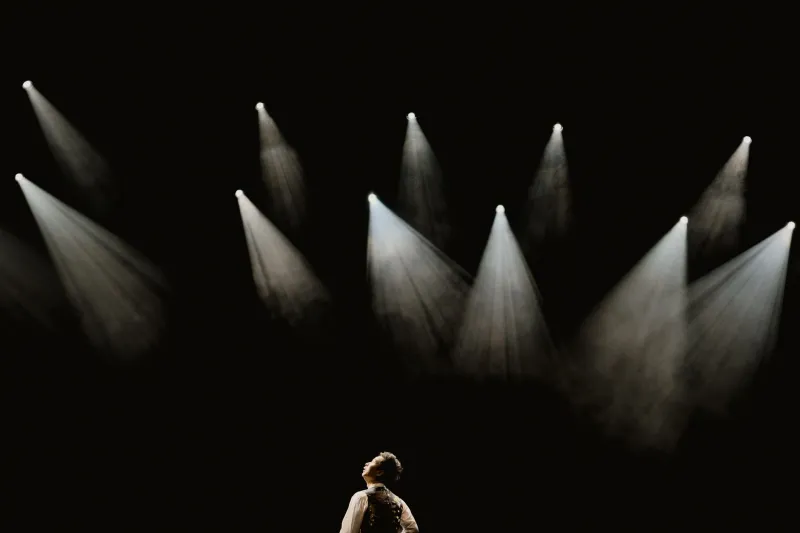
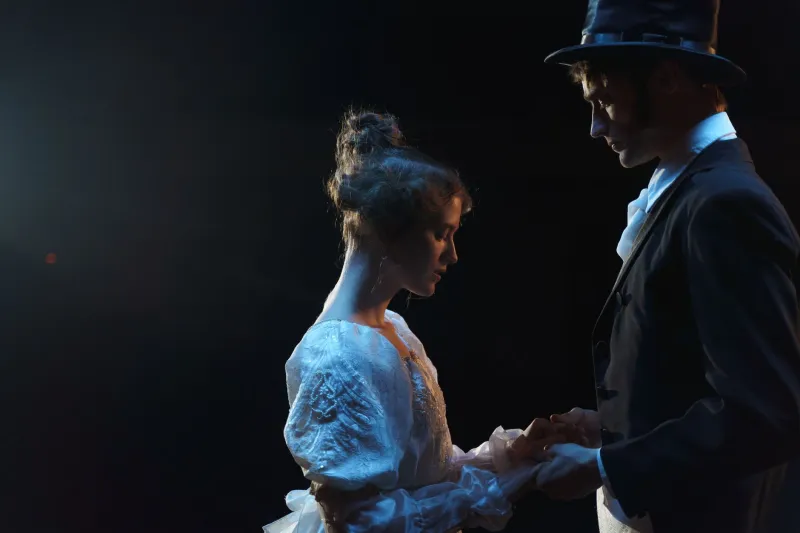
There is something almost theatrical about the slow burn's logic — and at eDramaTV, where the connection between stage and screen has always felt central to our understanding of dramatic storytelling, that parallel is worth noting. Theater has always understood that the audience's patience is not a liability to be managed but a resource to be cultivated. A play that respects its audience's capacity for sustained attention can achieve effects that no amount of technical spectacle can replicate.
The best contemporary drama series are rediscovering this truth. They are learning, or perhaps remembering, that the screen — like the stage — is capable of something more than the delivery of sensation. It is capable of the kind of storytelling that stays with a viewer not because it surprised them, but because it told them something true.
In a cultural moment characterized by fragmentation, distraction, and the relentless acceleration of information, that may be the most radical proposition in television drama today.