Rooting for the Bad Guy: The Psychology Behind Television's Most Compelling Anti-Heroes
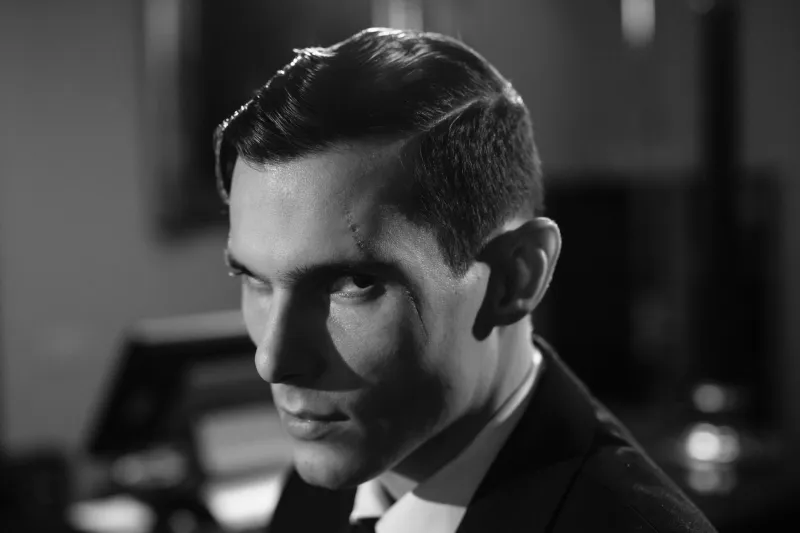
At some point during your viewing of Breaking Bad, The Sopranos, Succession, or Ozark, it likely happened. A character you knew to be morally compromised — manipulative, violent, self-serving, or all three — did something that served their interests at the expense of someone else's, and you felt a surge of satisfaction. Maybe even relief. You were rooting for the bad guy, and it felt entirely natural.
This experience is not a failure of moral reasoning. It is, in fact, one of the most carefully engineered effects in prestige drama — and understanding the psychology behind it reveals a great deal about both the craft of serialized storytelling and the interior lives of the audiences who engage with it.
The Architecture of Complicity
The anti-hero's hold on the audience does not happen by accident. It is constructed with considerable deliberateness, beginning in the earliest episodes of a series, before the character's worst qualities have fully emerged.
Writers typically establish what might be called a "sympathy anchor" — a quality, circumstance, or vulnerability that makes the character legible and relatable before the moral complexity arrives. Walter White is a brilliant man humiliated by circumstance. Tony Soprano is a man crushed by the gap between who he is and who he wishes he were. Logan Roy, beneath the cruelty, is a man terrified of his own mortality and the irrelevance it promises.
By the time these characters begin making choices that should alienate the audience, the emotional investment has already been secured. The viewer is not simply watching a villain; they are watching someone they have come to know, however uncomfortably.
Identification and the Permission Structure of Fiction
Psychological research on narrative transportation — the degree to which audiences become immersed in fictional worlds — suggests that deep engagement with a character produces a form of temporary identification that can override the viewer's ordinary moral responses. When we are sufficiently invested in a character's perspective, we begin to process their goals as our own, at least within the frame of the narrative.
This is not moral corruption. It is one of fiction's oldest and most valuable functions. Drama has always provided a space in which audiences can experience, at a safe remove, impulses and desires that they would neither act upon nor endorse in their own lives. The anti-hero is a vessel for the audience's shadow — the competitive drive, the resentment of constraint, the fantasy of operating outside the rules that govern ordinary existence.
Television, with its extended runtime and intimate viewing context, is particularly effective at facilitating this identification. Watching a character across fifty or sixty hours of narrative creates a depth of familiarity that no film can replicate. The anti-hero becomes, in a meaningful sense, a long-term relationship.
The Role of Competence
One of the most consistent features of television's most beloved anti-heroes is exceptional competence. Walter White is a master chemist. Tony Soprano is an effective, if brutal, organizational leader. Kendall Roy, for all his failures, demonstrates flashes of genuine strategic intelligence. Marty Byrde is a financial operator of remarkable resourcefulness.
Audiences are drawn to competence in ways that can override moral judgment, at least temporarily. There is a deep-seated human tendency to admire skill, even when that skill is deployed toward destructive ends. The anti-hero who executes a plan with precision — who outmaneuvers an opponent, survives an impossible situation, or demonstrates mastery under pressure — triggers an admiration response that the character's ethics might otherwise preclude.
This is a deliberate craft choice. Writers know that audiences will follow a character into morally uncomfortable territory if that character is demonstrably good at what they do. Competence creates a kind of narrative permission.
Moral Proximity and the Sliding Scale
Another psychological mechanism at work in the anti-hero dynamic is what might be called moral proximity — the tendency to evaluate a character's actions not against an absolute ethical standard but against the other characters in their immediate environment.
When Tony Soprano is surrounded by people who are, in many respects, worse than he is — more capricious, more cruel, more transparently self-serving — he begins to occupy a relative moral high ground that is entirely fictional but feels real. The same dynamic operates in Succession, where each Roy sibling's moral failures are constantly contextualized against the failures of the others.
This is a sophisticated manipulation of the audience's moral reasoning, and the best drama writers deploy it with considerable precision. They understand that viewers do not evaluate characters in isolation but in relation to their dramatic environment.
The Limits of Sympathy: When Anti-Heroes Lose the Audience
It is instructive to examine the moments when this carefully constructed sympathy collapses — when audiences withdraw their investment from an anti-hero they had previously championed.
These moments typically occur when the character commits an act that cannot be rationalized, contextualized, or attributed to understandable human weakness. When the violence becomes gratuitous rather than purposeful. When the manipulation extends to someone the audience has been positioned to protect. When the character's self-awareness drops below a threshold that allows for even minimal identification.
The withdrawal of sympathy is itself dramatically meaningful. It signals that the writer has decided the audience's complicity has served its narrative purpose — that the time has come to confront rather than accommodate the character's worst qualities. The most sophisticated anti-hero narratives engineer this moment with as much care as they devoted to building the original sympathy.
What Our Investment Reveals
The question of why we root for anti-heroes ultimately redirects back to the audience. What does it reveal about us that we find these characters so compelling?
One answer is that the anti-hero gives us permission to examine our own capacity for moral compromise in a context that carries no real-world consequence. We can explore, through the safety of narrative, what it might feel like to prioritize our own interests absolutely, to refuse the constraints of social obligation, to pursue power without apology.
Another answer is more generous: that our investment in anti-heroes reflects not an endorsement of their behavior but a genuine engagement with the complexity of human nature. We root for them not because we want them to win but because we recognize something in them — some fragment of ambition, resentment, fear, or desire — that we know from the inside.
Prestige drama, at its most accomplished, uses the anti-hero not to celebrate moral failure but to illuminate it — to make visible the interior logic of choices we would not make and the human costs they exact on everyone, including the person making them.
That is the art of it. And it is why, even after the credits roll and the spell partially lifts, the experience of having rooted for the bad guy stays with us.