One Character, Many Lives: The Prestige Drama Technique of Reimagining Identity Across Time and Actors
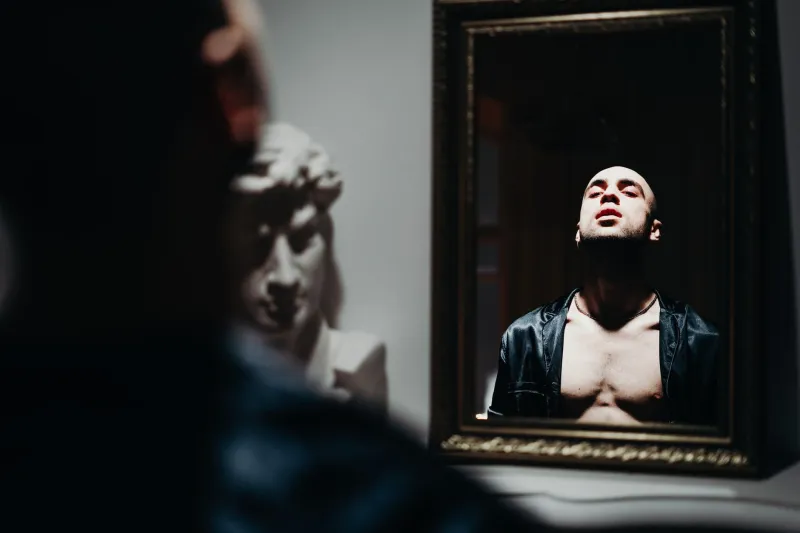
There is something uniquely destabilizing — and uniquely compelling — about watching a character you have come to know suddenly inhabit a different face. The voice changes. The posture shifts. The historical context transforms every familiar impulse into something new and strange. Yet the essential person persists, recognizable beneath the layers of performance and period detail. This is the central paradox of one of prestige drama's most ambitious storytelling techniques: the reimagining of a single character across multiple timelines, generations, or alternate scenarios, each portrayed by a different actor.
What was once a relatively rare formal experiment has become an increasingly deliberate narrative strategy in American prestige drama and international productions with significant US audiences. The technique demands much from both its creators and its viewers. In return, it offers something that more conventional dramatic structures rarely can — a portrait of identity as something fluid, contested, and irreducibly complex.
The Architecture of a Fragmented Portrait
To understand why this technique resonates so powerfully, it helps to examine its underlying architecture. When a drama series commits to portraying the same character across different eras or through different performers, it is making a specific philosophical argument about the nature of selfhood. It is suggesting that a person is not merely the sum of their present circumstances, but the product of an entire lineage of choices, traumas, relationships, and inheritances — some of which they may not even be aware of.
This structure inherently invites comparison. Audiences become active participants in the storytelling, reading each new iteration of the character against the ones they have already encountered. They notice continuities — a particular emotional reflex, a recurring pattern of behavior, a defining vulnerability — and they notice divergences. The drama emerges not only from what happens within any single timeline, but from the accumulating meaning produced by the juxtaposition of all of them.
The casting choices are, in this context, never incidental. When a production selects different actors to portray the same character at different stages of life or in different historical periods, it is making deliberate interpretive statements. The physical and performative differences between those actors become part of the text itself, asking audiences to consider how much of a person is shaped by their body, their era, and their social position — and how much endures regardless of those variables.
Landmark Examples and What They Illuminate
American prestige drama has produced several notable examples of this technique in recent years, each approaching the fragmented portrait from a distinct angle.
Productions that trace a character from childhood through old age across different performers are perhaps the most structurally straightforward iteration. Here, the casting of multiple actors is a practical necessity that becomes a creative opportunity. When executed with care — when the writers and casting directors ensure genuine connective tissue between each performer's interpretation — these transitions can produce moments of startling emotional clarity. The audience suddenly perceives the elderly figure on screen as the child they met in the opening episodes, and the accumulated weight of a lifetime becomes briefly, vividly present.
More formally adventurous are the productions that reimagine the same character across genuinely separate timelines or alternate historical circumstances. Here, the technique moves beyond biography into something closer to philosophical inquiry. What does it mean that this person, placed in a different century or a different social context, makes recognizably similar choices? What does it reveal about the character — and perhaps about human nature more broadly — when those circumstances are radically altered and the choices diverge?
Anthological drama series have pushed the technique further still, casting different performers in roles that are explicitly linked by name, archetype, or recurring symbolic detail rather than by strict narrative continuity. In these cases, the audience is asked to construct the connection themselves, assembling a coherent identity from deliberately discontinuous fragments. The interpretive labor required is considerable — and for devoted drama audiences, deeply rewarding.
The Audience's Role in Reconstruction
What distinguishes this technique from other forms of non-linear storytelling is the specific cognitive and emotional work it demands of its audience. Viewers of a fragmented multi-actor portrait are not simply tracking a plot across time; they are engaged in an ongoing act of interpretation, constantly asking themselves what connects these disparate versions of the same person.
This is, in a meaningful sense, a dramatization of how we understand real human beings. We rarely encounter a person fully formed. We meet them at a particular moment in their lives, and we reconstruct the rest — their history, their formative experiences, their likely future — from inference and imagination. The multi-timeline drama externalizes this process, making the act of reconstruction explicit and collaborative.
For American audiences in particular, this technique carries additional cultural resonance. Questions of identity — national, racial, generational, personal — are woven into the fabric of contemporary public life in the United States in ways that make drama's exploration of selfhood across time feel immediately relevant. A character whose identity shifts across eras of American history, or whose sense of self is shaped by the specific social conditions of each period, speaks to something deep in the cultural imagination.
The Demands Placed on Writers and Performers
The technique is not without its considerable creative challenges. For writers, the construction of a character who must remain coherent across multiple timelines and multiple performers requires extraordinary discipline and precision. The connective tissue between iterations — the recurring behavioral patterns, thematic preoccupations, and emotional signatures that allow audiences to recognize continuity — must be embedded carefully enough to function without becoming schematic or mechanical.
For the actors involved, the challenge is equally distinctive. Each performer must develop their interpretation of the character in genuine dialogue with the others, understanding what they are contributing to a collective portrait rather than constructing a wholly independent performance. This requires a degree of collaborative self-effacement that is somewhat unusual in dramatic acting, which more typically rewards distinctive individual expression.
When it works — when writers, directors, and performers align around a shared understanding of what the character's essential nature is and how it manifests across different contexts — the results can be among the most intellectually and emotionally sophisticated that prestige drama produces.
What This Trend Reveals About Drama's Current Moment
The growing prevalence of this technique in prestige drama is not merely a formal experiment. It reflects something substantive about where the medium is in its cultural evolution. Contemporary drama — particularly in the streaming era, where entire seasons are available for immediate, consecutive viewing — has developed an appetite for complexity and duration that episodic television of earlier generations rarely accommodated.
Audiences who devote hours to a single narrative world are willing, even eager, to engage with structures that reward patience and attentiveness. The fragmented multi-actor portrait is, in this sense, a product of the same viewing culture that has made slow-burn serialized drama one of the defining artistic forms of the current moment.
More fundamentally, it reflects drama's enduring fascination with the deepest questions of human experience: Who are we, really? How much of what we call identity is fixed, and how much is circumstantial? What do we owe to the versions of ourselves that came before, and what do we bequeath to those who will come after?
These are questions without definitive answers. Drama, at its finest, does not pretend otherwise. It stages the questions with care and artistry, and trusts its audience to sit with the complexity. At eDramaTV, that trust is precisely what we believe every story deserves.